
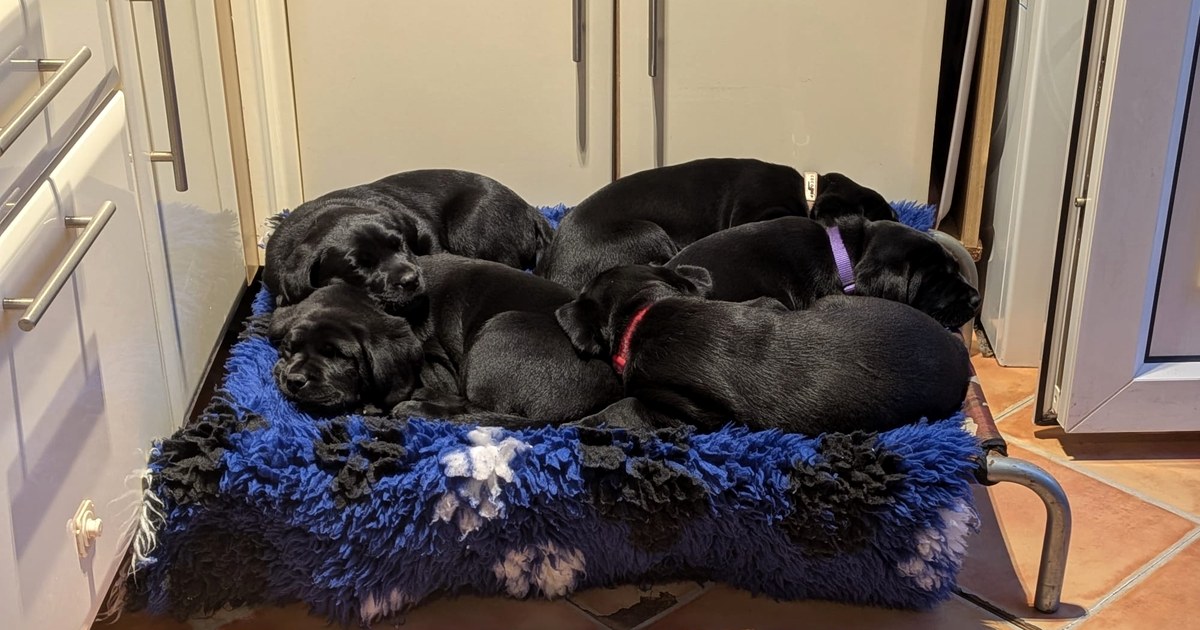
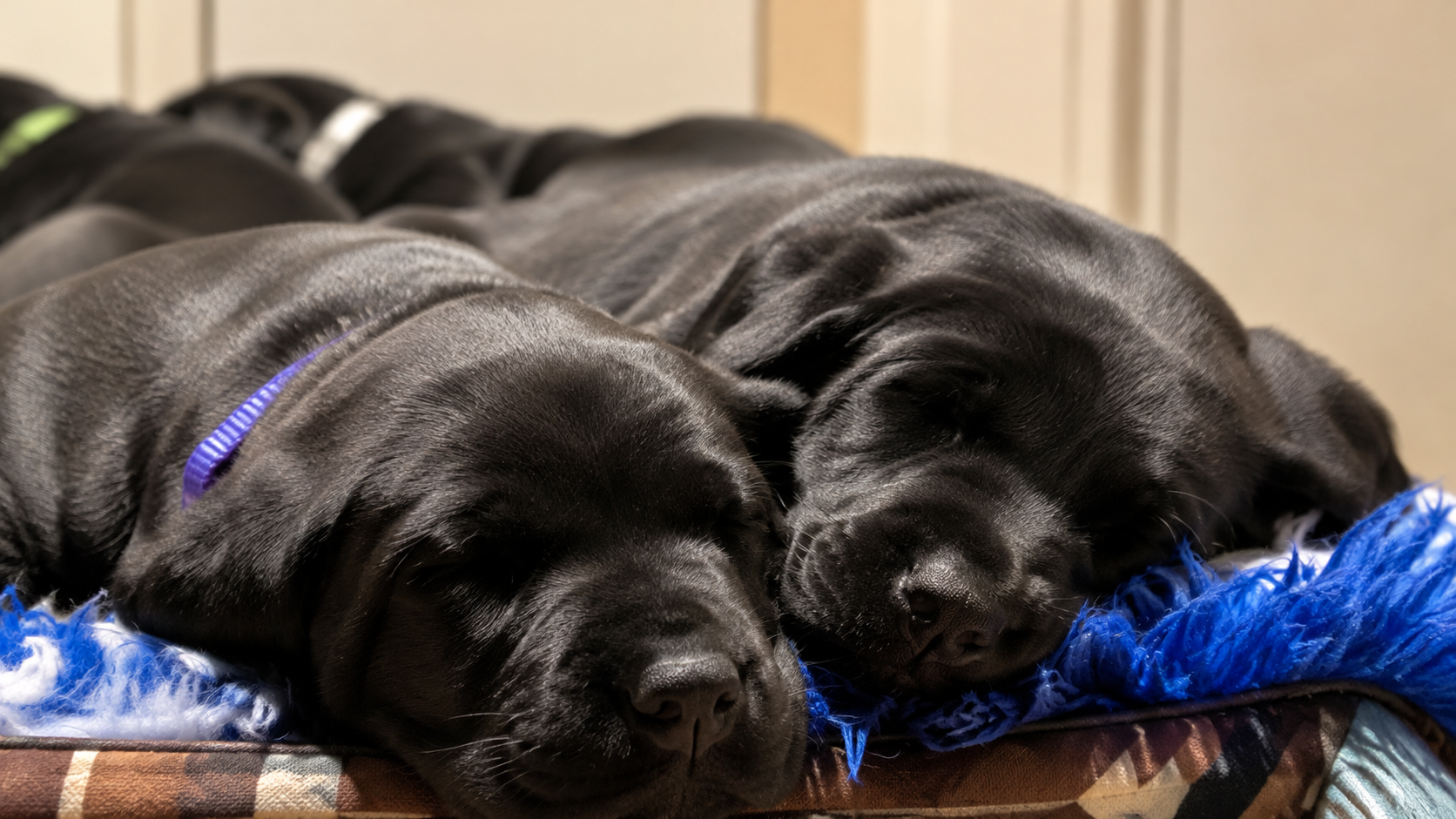
Bringing a new puppy into the family is an exciting time. It’s also a time when owners can find themselves surrounded by advice, different training methods and a seemingly endless list of things their puppy should be learning.
Toilet training, puppy biting, jumping up, recall, lead walking and learning to settle are just some of the challenges new owners encounter.
But here’s something I’ve always believed.
Good puppy training isn’t about how many commands your puppy knows. It’s about how well your puppy understands what you’re teaching — and how well you understand your puppy.
At THE DOG MAN®, that’s where our foundation training begins.
Why Puppy Training Can Feel Overwhelming
One of the things I regularly see is enthusiastic owners trying incredibly hard to get everything right.
And that’s a good thing!
The difficulty comes when we try to do too much, too quickly.
A puppy may happily sit in the kitchen, respond beautifully to a reward and appear to understand the exercise. Take that same puppy outside, with interesting smells, people, traffic and other distractions, and suddenly things become more difficult.
Has the puppy forgotten everything?
Not necessarily.
We’ve changed the environment, and with it, the difficulty of the exercise.
Training needs to progress at the puppy’s pace, not simply at the pace of our expectations.
That’s an important distinction.
What Should You Teach Your Puppy First?
Before concentrating on obedience commands, I prefer to establish a few essential foundations.
- Focus and engagement: Helping your puppy discover that choosing to pay attention to you can be rewarding.
- Understanding rewards: Using food, toys, play and other appropriate rewards to reinforce behaviours we want to encourage.
- Confidence and independence: Allowing your puppy to explore, investigate and work things out through carefully structured experiences.
- Impulse control: Gradually helping your puppy develop patience and make calmer choices, without expecting adult behaviour from a youngster.
- Everyday life skills: Introducing comfortable handling, positive exchanges, recall foundations, settling and early lead skills.
These exercises might appear simple, but they’re the building blocks for much of what follows.
Rather than attempting to teach everything at once, we establish understanding and then progressively develop the behaviour.
Puppy Biting, Jumping Up and Distractions: Understanding the Behaviour
Puppies investigate the world with their noses and mouths. They become excited, get distracted, pick things up and sometimes make choices we would rather they didn’t.
That’s part of learning.
Our job is to manage those situations safely and help puppies discover which behaviours are rewarding.
For example, rather than continually correcting a puppy for jumping up, we can teach and reward appropriate greetings.
Instead of chasing a puppy that’s picked up an object, we can develop a positive exchange and teach the puppy that giving something up can be worthwhile.
When practising recall, we begin somewhere relatively easy and make returning to us enjoyable before introducing greater distractions.
The aim isn’t simply to stop unwanted behaviour. It’s to teach the puppy what we would like them to do instead.
And, importantly, we shouldn’t expect a puppy to manage situations it hasn’t yet been prepared for.
The Three Ds of Puppy Training
One of the principles I regularly introduce during coaching is what we call the Three Ds:
Duration — Distance — Distraction.
These are three ways we can increase the difficulty of an exercise.
Let’s take a simple sit.
Initially, we might reward the puppy for sitting briefly beside us in a quiet room.
Once that behaviour is becoming established, we can gradually increase how long the puppy remains sitting.
Later, we might introduce a small amount of distance between ourselves and the puppy.
Eventually, we can practise in different environments with carefully managed distractions.
The important thing is not to increase everything at once.
If the puppy struggles, we reduce the difficulty and help it succeed.
Small steps, practised consistently, make all the difference.
Working-Line Puppies: Getting the Balance Right
Having worked with Cocker Spaniels myself, I appreciate just how rewarding these wonderful little dogs can be.
Working-bred dogs, including many spaniels, can be particularly enthusiastic, inquisitive and motivated to investigate their surroundings.
Those qualities can be a real pleasure to work with, but they also make thoughtful foundation training especially valuable.
It’s easy to assume that an energetic puppy simply needs more activity.
However, appropriate rest, mental enrichment, calm engagement and learning how to settle are also important parts of development.
We want to encourage natural curiosity and confidence while gradually developing the skills that allow the dog to live comfortably within its family.
And, of course, every puppy is an individual. Breed and breeding can influence behaviour, but they don’t tell us everything about the dog in front of us.
Why Bespoke One-to-One Puppy Training Makes a Difference
No two puppies are exactly alike, and neither are their owners.
Different households have different routines, expectations, experiences and environments.
That’s why I believe puppy training should be tailored to the individual circumstances rather than expecting every puppy and owner to follow precisely the same programme.
At THE DOG MAN®, our bespoke one-to-one puppy training is designed around both the dog and the people responsible for its development.
We don’t simply demonstrate exercises. We explain why we’re doing them.
That’s a particularly important part of our coaching.
When owners understand how dogs learn, how to recognise progress and when to make an exercise easier or more challenging, they’re better equipped to continue training between sessions.
Our programmes are supported by relevant training notes, personalised videos and access to our private Client Zone, allowing owners to revisit the exercises and receive guidance as their training develops.
For me, that’s what professional coaching should be about — giving owners the understanding and confidence to continue making progress themselves.
How Long Should Puppy Training Sessions Last?
There’s no benefit in making a training session longer simply for the sake of it.
For many young puppies, a few minutes of focused, enjoyable practice is plenty.
The puppy’s age, attention, motivation and emotional state should influence how much we ask.
Sometimes, finishing after two or three really good repetitions is far more productive than continuing until things begin to fall apart.
And training doesn’t always need to look like a formal lesson.
Rewarding a puppy for calmly checking in with you, waiting appropriately, settling or making a good choice during normal daily activities can all contribute to learning.
When Should You Start Training Your Puppy?
You can begin introducing gentle, positive learning experiences as soon as your puppy comes home.
Early priorities include building trust, establishing comfortable routines, rewarding desirable choices and providing appropriate socialisation experiences.
Socialisation isn’t about meeting as many dogs and people as possible. It’s about helping your puppy develop positive, manageable experiences with the world around it.
New experiences should be introduced thoughtfully, taking account of the puppy’s confidence, health and veterinary advice.
It’s never about overwhelming a puppy or rushing its development.
The Most Important Lesson? Don’t Rush.
Puppy training isn’t a race.
There will be good days, distractions, moments of frustration and plenty of learning along the way.
What matters is that the puppy continues developing confidence and understanding, while its owners become increasingly comfortable with the training process.
Establish the behaviour. Practise it. Reinforce it. Gradually progress. Then help the puppy understand it in different environments.
That’s how we build useful foundations for everyday life.
And don’t forget to enjoy your puppy along the way!
It’s a message echoed by Steve, who reflects on the importance of taking your time in his testimonial.
Bespoke Puppy Training in Staffordshire
If you’re looking for professional, one-to-one puppy training in Stafford, Cannock or the surrounding Staffordshire area, THE DOG MAN® offers personalised coaching designed around your puppy, your family and your individual training goals.
Whether you’re preparing for a new puppy or have already started your training journey, we’re here to help you understand the process and build the right foundations.
Explore Our Bespoke Puppy Training Program
THE DOG MAN® — Bespoke One-to-One Dog Training
Because understanding why we train is every bit as important as knowing how.


